
Egypt had 98.2 million internet users at the end of 2025, equal to 82.7% of the population, according to DataReportal.
These numbers explain why digital channels matter, but they do not mean every offline channel has lost value. The real question in digital marketing versus traditional marketing is simple: which approach helps your business reach the right people and produce measurable results?
Digital Marketing Versus Traditional Marketing: What Is the Difference?
Both approaches promote products and services, but they reach people in different ways.
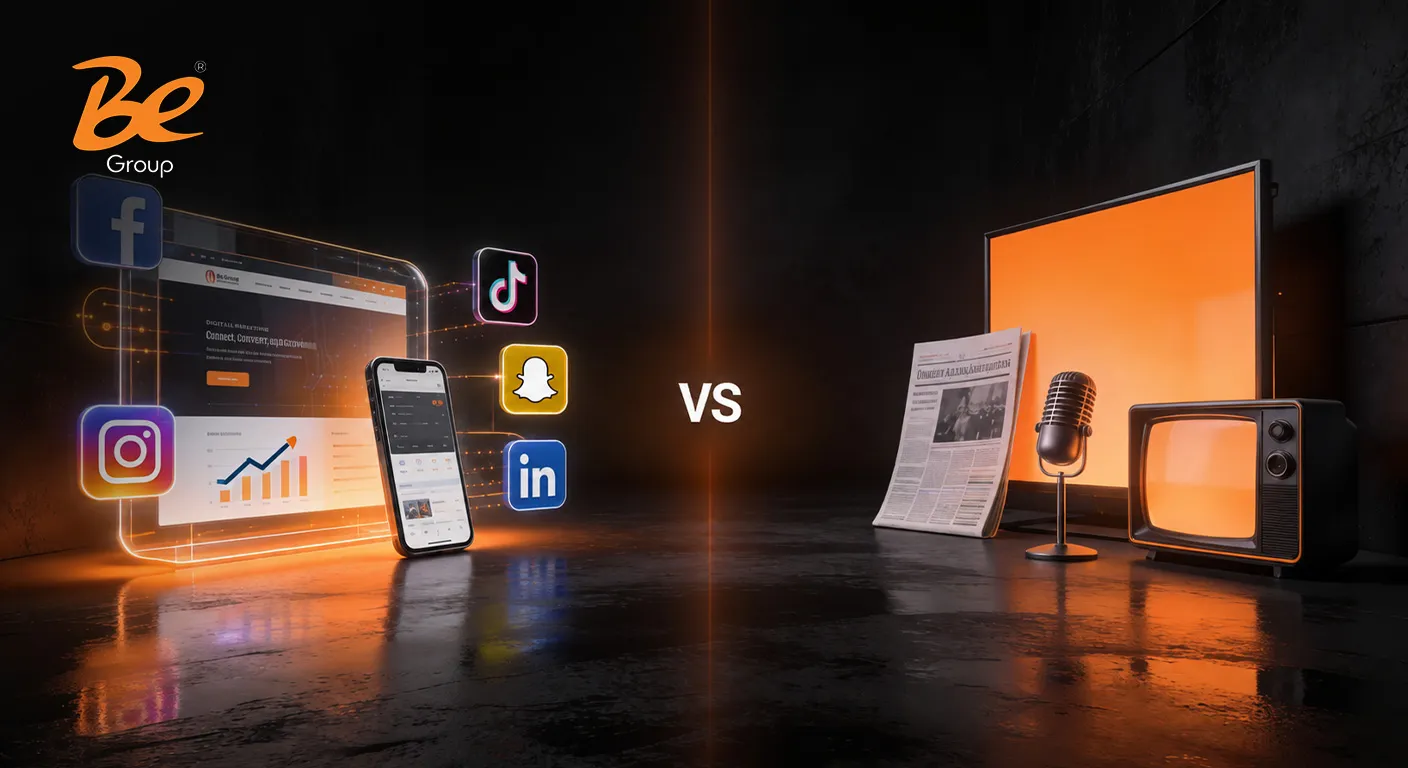
- Digital marketing uses channels such as search engines, websites, email, social media, online video, and paid digital ads.
- Traditional marketing uses television, radio, newspapers, magazines, flyers, billboards, and other offline media.
- Digital campaigns can usually target specific audiences and track actions such as clicks, calls, leads, and purchases.
- Traditional campaigns are often designed for broad exposure, local visibility, or repeated brand awareness.
In practice, the comparison is less about old versus new and more about how each channel supports a business goal.
How Digital and Traditional Marketing Reach Customers
Consider two people. One searches Google for “best accounting software for small businesses.” The other drives past a billboard for an accounting company.
The first person is already showing clear intent. A search campaign can meet that demand at the moment it appears. The billboard may reach thousands of people, but many of them may not need the service today.
This is why digital marketing versus traditional marketing should be judged by customer behavior, not popularity. A strong strategy starts by asking where customers spend time, what they need, and what action you want them to take next.
Build your marketing around customer intent, not random channels.
Cost, Targeting, and Measurement
Digital channels often give businesses more control, but they are not automatically cheaper.
Cost
A paid search campaign can start with a controlled budget, while television, print, or outdoor campaigns may require larger upfront spending. However, competitive keywords can also make digital advertising expensive.
Targeting
Digital platforms can narrow audiences by location, interests, search behavior, or previous website visits. Traditional media usually reaches a wider group with less individual targeting.
Measurement
Digital campaigns can connect traffic to forms, calls, sales, or other actions. Offline campaigns can also be measured, but attribution is usually harder.
Digital Marketing Versus Traditional Marketing: Which Method Gives Businesses More Control?
For companies that need fast testing and clear data, digital marketing often holds the advantage over traditional marketing because digital channels allow teams to:
- Adjust budgets.
- Test different messages.
- Retarget interested visitors.
- Track conversions.
- Pause weak campaigns quickly.
Which Delivers Better ROI: Digital or Traditional Marketing?
ROI depends on what you sell, who you target, and how well you track results.
A local clinic may get faster leads from google search because people searching for a nearby service have intent. A consumer brand may still use outdoor advertising to build awareness before supporting that reach with digital campaigns.
This is why digital marketing versus traditional marketing should not be reduced to cost alone. The better channel reaches the audience, moves people toward action, and shows whether the money spent created a result.
Is Traditional Marketing Still Worth It?
Traditional marketing can still work when your goal depends on broad reach, local visibility, or physical presence. Billboards can support location-based awareness. Events can create contact with buyers. Radio may work for local audiences. Print can help sales teams explain an offer.
In digital marketing versus traditional marketing, digital channels make testing easier, while traditional channels often need planning to prove results.
Build the right marketing mix before increasing your budget.
Difference Between Online Marketing and Digital Marketing
The difference between online marketing and digital marketing is simple: online marketing needs internet access, while digital marketing is a term that includes digital technology.
Online Marketing
Examples include SEO, paid search, social media ads, email, websites, and online video. These channels depend on internet access and can usually be tracked through digital analytics.
Digital Marketing
Digital marketing includes online channels, but it can also cover digital screens, SMS, and other technology-based communication. This distinction matters because businesses often use both terms as if they mean the same thing.
For companies comparing digital marketing versus traditional marketing, understanding this wider scope helps them choose channels based on customer behavior instead of labels.
Read Also: Digital Marketing Agency
Talk to Be Group about the right marketing mix for your business.
Digital Marketing vs Social Media Marketing: They Are Not the Same!
Digital marketing vs social media marketing is another common source of confusion. Social media marketing is only one part of a wider digital strategy.
A complete digital plan may include:
- SEO to capture search demand.
- Google Ads for high-intent traffic.
- Social media for reach and engagement.
- Email for follow-up and retention.
- Websites and landing pages for conversion.
- Content that supports trust and search visibility.
When comparing digital vs social media marketing, the main point is scope. Social media focuses on Facebook, Instagram, LinkedIn, and TikTok. Digital marketing covers the customer journey across several channels.
How Global Brands Combine Digital and Traditional Marketing?
Some of the world’s biggest brands show how digital and traditional marketing can work together instead of competing with each other.
Coca-Cola
Coca-Cola’s 2025 share a coke campaign shows why campaigns do not always choose one side. The brand put names on bottles and cans, then connected them to a digital hub through QR codes.
Coca-Cola used influencers, social platforms, outdoor advertising, and digital experiences across more than 120 countries. The campaign reached 10 billion bottles and cans.
It shows digital marketing versus traditional marketing working as one customer experience.
McDonald’s
McDonald’s offers a lesson. In 2025, sales to loyalty members across 70 markets rose 20% to nearly $37 billion, while 90-day active loyalty users reached almost 210 million.
Its application and loyalty program turn purchases into measurable relationships. Not every company needs an application.
Digital tools can connect marketing with data, repeat visits, and sales.
What Smaller Businesses Can Learn From Global Brands?
Smaller companies can use these principles without large budgets. A QR code on printed material can lead to a landing page. An event can collect leads for email follow-up. An outdoor campaign can support branded search and paid social.
When planning digital marketing versus traditional marketing, give every channel a job:
- Use offline media to build visibility where it makes sense.
- Send people to a trackable digital destination.
- Measure leads, calls, purchases, or bookings.
- Retarget people who showed interest.
- Stop channels that consume budget without supporting a goal.
How to Choose the Right Marketing Mix in Egypt and the Middle East?
Digital channels are difficult to ignore, but the mix still depends on your market, audience, and sales process.
For lead generation, SEO, Google Ads, and landing pages can capture people looking for a solution. For awareness, social media, video, display advertising, and outdoor placements can work together. E-commerce businesses may need search, social ads, remarketing, content, and a website built to convert visitors.
This is where digital marketing versus traditional marketing becomes a business decision rather than a marketing debate.
Why Choose Be Group for Your Marketing Strategy?
Choosing between channels is only part of the decision. You also need a team that understands how SEO, paid advertising, social media, websites, branding, and content work together to support the same business goal.
Experience since 2009
Be Group has worked in digital marketing and web solutions since 2009, giving the team years of experience across changing platforms, customer behavior, and market conditions.
Experience across different projects
Be Group reports completing more than 3,000 projects across different industries, including over 700 SEO projects and more than 2,500 websites.
Read Also: Digital Marketing Strategy
Integrated digital services
Instead of managing SEO, Google Ads, social media, web development, branding, and media production separately, businesses can work with one team across several parts of their digital presence.
Understanding of regional markets
With operations across Egypt and the Middle East, Be Group works with businesses serving different audiences, markets, and customer needs.
A strategy based on business goals
The focus should not be on choosing digital marketing versus traditional marketing simply because one channel is more popular. The right approach starts with your audience, budget, sales process, and the results you need to achieve.
Talk to Be Group and build a marketing strategy around the channels that make sense for your business.
FAQS
Here are quick answers to the most common questions about both approaches:
Is digital marketing better than traditional marketing?
Digital marketing is often better for targeting, tracking, and measuring results, while traditional marketing can still be effective for broad awareness and local reach.
How does digital marketing differ from traditional marketing methods?
Digital marketing uses online channels and measurable data to reach specific audiences, while traditional marketing relies on offline channels such as TV, radio, print, and billboards.
Still Have a question? Contact Be Group and let’s talk.