


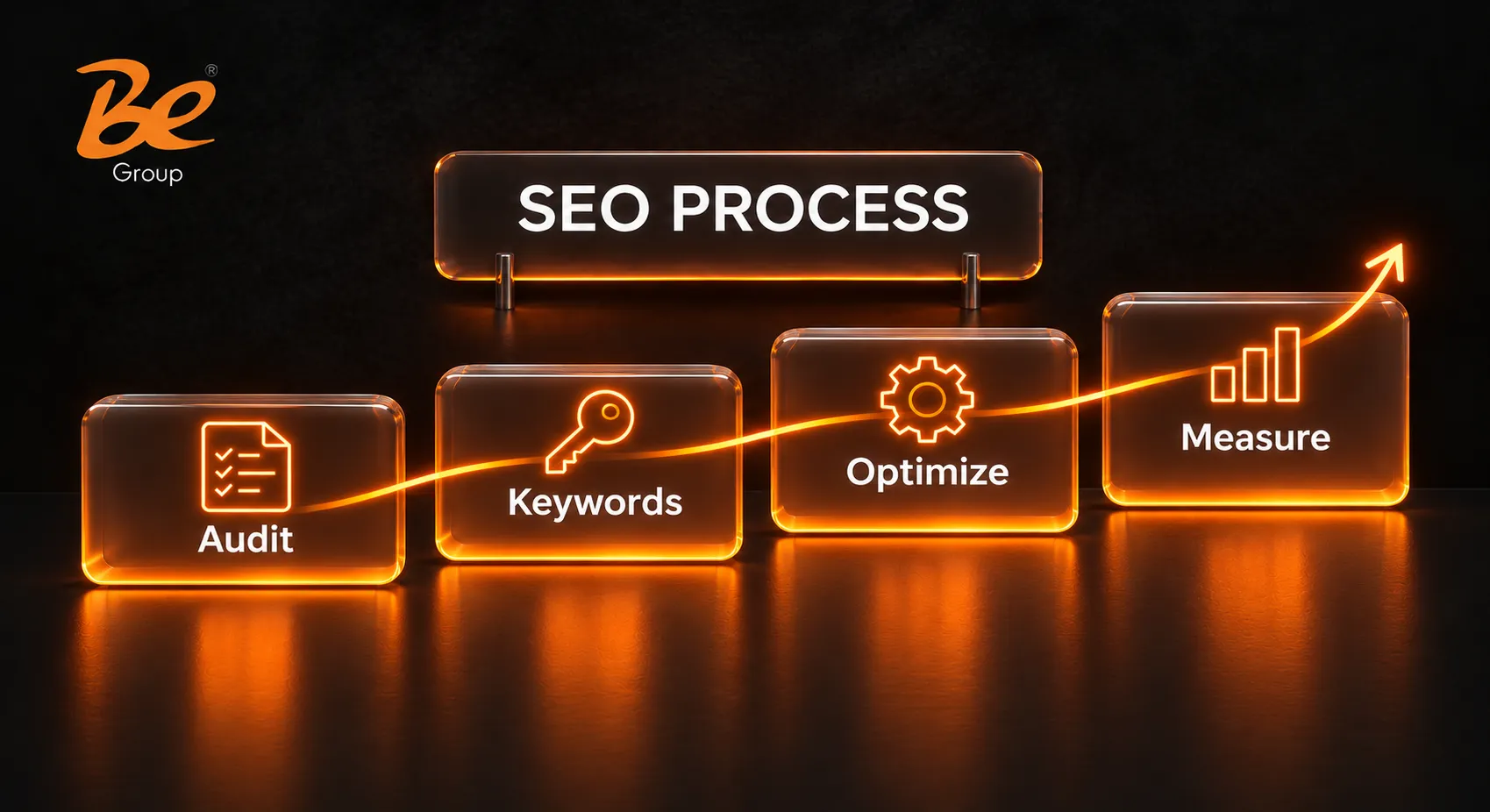
You paid for SEO, waited three months, and still cannot tell what changed. That happens when nobody explains the search engine optimization process behind the monthly invoice. SEO is not one task. It is a set of steps done in order, and each one depends on the one before it.
This guide walks you through those steps, how long they take, and what to ask for, so you can judge the work instead of hoping for it.
What Is the Search Engine Optimization Process?
The search engine optimization process is the set of steps you follow to help your website appear higher in Google results for the searches your customers make. It covers how your site is built, what your pages say, and how other websites talk about you.
Google sends a crawler to read your pages, stores them in its index, and then ranks them when someone searches. Each SEO step makes one part of that easier: helping Google find your pages, understand them, and trust them enough to show them.
Unlike paid ads, you do not pay for each click. The cost is time and work, and results build up month after month instead of stopping when the budget ends.
What Are SEO Steps?
Every search engine optimization process follows the same basic order. Skipping a step usually means repeating work later.
- Audit: check what works on your site now and what is broken.
- Goals: decide which pages should bring which customers.
- Keyword research: find the words your customers type into Google.
- Technical SEO: make sure Google can reach and read every important page.
- On-page SEO: improve titles, headings, and page content.
- Content and links: publish useful pages and earn mentions from other sites.
- Tracking: measure traffic, leads, and rankings, then adjust.
Not sure which step your site is missing? Book a free SEO consultation with Be Group.
Seo steps under the microscope
The first part of the search engine optimization process is planning. It decides where the rest of the work goes.
Step 1: Audit your site
Check how many of your pages Google has indexed, which pages already get visits, and what is broken, such as slow pages, missing titles, or links that lead nowhere. Google Search Console is free and shows most of this. Then look at the three competitors that rank above you for your main services, and note what their pages cover that yours do not.
Step 2: Set clear goals
Tie each goal to your business. “Rank first” is not a goal. “Get more calls from people searching for kitchen designers in New Cairo” is. Start with the three to five services that bring most of your profit.
Step 3: Research keywords
Find the words your customers use, not the words your team uses inside the company. Check how many people search each term and how hard it is to rank for it.
Then group keywords by intent. Someone searching “what is a dental implant” wants to learn, while someone searching “dental implant price in Cairo” is closer to buying. Each group needs its own page.
Steps 4 and 5: Technical and On-Page SEO
This is the part of the search engine optimization process most site owners never see, but it decides whether Google can read your pages and whether visitors stay:
- Speed: slow pages lose visitors, especially on mobile data.
- Mobile-friendly design: Google mainly uses the mobile version of your site to rank it.
- Indexing: important pages should be open to Google, and duplicate or empty pages should not compete with them.
- Titles and descriptions: each page needs a clear, unique title that includes its main keyword. Write it for people, because a clear title gets more clicks from the same position.
- Headings and content: answer the search directly at the top, then add detail.
- Internal links: link related pages so visitors and Google can move between them.
You do not need to fix everything at once. Start with the pages that bring money, such as service and product pages, then move to the rest.
Want a technical check of your website? Talk to the Be Group SEO team.
Step 6: Publish content and earn links
Give each keyword group its own page. Service pages answer buying searches, and blog posts answer the questions customers ask before they buy. Update old pages instead of always writing new ones.
Links from respected sites tell Google that others trust you. You can earn them through useful content, local directories, partners, and press coverage.
If you serve a local area, complete your Google Business Profile with your hours, photos, and services, and ask happy customers for reviews, so you show up on Google Maps.
Step 7: Track and adjust
Google Search Console shows which searches bring clicks. Google Analytics shows which visits turn into calls, messages, or forms. Compare the numbers every month and move time and budget to the pages that work.
Read Also: Search Engine Optimization Experts
What Does SEO Workflow Look Like?
A clear SEO workflow splits the work by how often it needs to happen:
- Every week: publish or update content, and fix new errors that show up in Google Search Console.
- Every month: report traffic, leads, and rankings, then plan the next month’s content.
- Every three months: run a full audit, review keywords and competitors, and update the plan.
This rhythm keeps the search engine optimization process moving instead of stopping after the first round of fixes.
Want a clear monthly SEO plan? Ask Be Group for one.
How Long Does SEO Process Take?
Google has answered this itself. In a 2017 video on hiring an SEO, Google’s Maile Ohye said that in most cases, SEOs need four months to a year to help a business make improvements and then see results.
The exact time depends on your site’s age, your competition, and how much work the site needs. Fixing an existing site can show results sooner than building a new one in a crowded field.
So treat the benefits of search engine optimization process as a long project, and be careful with anyone who promises the first page in a month.
Why Does the Search Engine Optimization Process Fail?
Most failed SEO projects share the same mistakes:
- Expecting fast results. Stopping after two months throws away work that was about to pay off.
- Chasing rankings, not customers. Ranking first for a word nobody buys with brings no sales.
- Buying links. Google’s spam policies treat links bought to raise rankings as spam, and they can push your site down.
- Publishing many weak pages. Google treats mass-produced pages with little value as spam, whether a person or a tool wrote them.
- No tracking. Without it, nobody can tell which work brought results.
Paid for SEO with no results? Get a free review from Be Group.
Search Engine Optimization Process Examples
These cases show what single steps can bring when they are done well.
Rotten Tomatoes, Food Network, and Nestle: Better Results Pages
Google Search Central reports that Rotten Tomatoes got a 25% higher click-through rate on pages with structured data, which is code that helps Google show extra details such as ratings.
Food Network saw a 35% increase in visits after enabling search features on 80% of its pages, and Nestle saw an 82% higher click-through rate on pages shown as rich results.
Egyptian Bites: Local Content Built Area by Area
Egyptian Bites, an Egyptian site that lists restaurants by area, launched in September 2022. Its agency, Kaiilab, researched English and Arabic keywords and built pages area by area, starting with Sheikh Zayed and October.
The agency reports Google traffic rising from 521 visitors in October 2022 to 21,360 in October 2023.
Start Your Search Engine Optimization Process With Be Group
Be Group handles every step for you: the audit, keyword research in Arabic and English, technical fixes, content, links, and a monthly report that shows traffic, leads, and the next steps. We agree on clear goals in the first month, so you know what to expect and when.
Ready to start your search engine optimization process? Talk to the Be Group SEO team.
FAQS
Still have questions about the SEO process? Here are short answers to what people ask most.
Can I do SEO myself?
Yes, you can handle the basics with free tools like Google Search Console, but technical fixes and steady content take time and experience that many business owners do not have.
How much does SEO cost?
It depends on the size of your site, the competition in your field, and the work included each month, so ask for a clear list of monthly tasks before you compare prices.
Is SEO still worth it with Google’s AI Overviews?
Yes, Google says the same SEO practices that help pages rank also help them appear in AI Overviews.
Does social media help SEO?
Not directly, but posts that spread your content can bring visits, mentions, and links, and those do help.
Your customers are already searching for what you offer. Book a free SEO consultation with Be Group and find out which step your site needs next.